miércoles, 17 de mayo de 2017

Happy, an accounting assistant in the cloud for pymes

Happy, an accounting assistant in the cloud for pymes

Accounting, billing and management processes tend to be a headache for SMEs. Quotes, payments, invoices, payrolls, these are words that only pronounce them generate stress.

Fortunately, today technology is a great ally for our business, so I want to tell you about Alegra.com, an accounting software in the cloud that has been created precisely to help entrepreneurs in the management of their businesses.

The goal is to be "the right hand" of managers and business owners, who will be able to organize and control their company better to ensure their growth.

It is a software designed to work in the cloud, and can be used by several users, always with permissions from an administrator, who gives authorization and restricts the activities to others.

Happy is equipped with tools so that, after providing real information (income,) accounts, contacts, expenses, customers, etc.), companies can expedite processes such as business reports and analyses, tax payments, bank transfers or invoice generation, and successful decisions can be made for the business according to the data it generates.

It is a powerful software, safe, intuitive, easy to implement and with multiple functionalities that will improve the performance of your company.

With Alegra.com you can
  • Create invoices, send and export them
  • Organize your expenses
  • Control your bank accounts and Concíliarlas
  • Manage inventories in an organized and controlled manner
  • Ordering information from your customers and vendors
  • Generate Smart reports, sales, best customers and more in real time
Currently happy offers optimized plans for Colombia, Mexico, Peru, Dominican Republic, Panama and USA in Spanish. It will soon be available for Chile, Argentina and Spain.

martes, 16 de mayo de 2017

Why the next iphone or Samsung will rub the 1,000 euros (and many pay)

Why the next iphone or Samsung will rub the 1,000 euros (and many pay)

It is one of the few aspects in which the analysts and the mill that extends by the network seem to coincide: The next phones of Apple, Samsung and Google are going to be expensive. Very expensive. So much so that we talk about versions of some whose cost would be above the thousand euros. Has technology advanced so much as to justify that disbursement? Manufacturers believe they do, and pretend to prove it in a 2017 that should be anything but a year of transition in the mobile market.

This year marks the tenth anniversary of the launch of the iphone and, after three years with the same design, is given for fact a change in the design of the terminal attached to other characteristics that much is speculated but little is known. One of the ideas that seems to have been more powerful among market analysts is the notion that the manufacturer will present three phones in his usual ' keynote ' in early September: the iphone 7s, the 7s Plus and a new one that could have the name of iphone edition.

That new model is the one that, if we listen to predictions, would be placed at a price quite above the usual. Several reasons would explain this decision: the inclusion of OLED screens, provided by Samsung and whose availability is not going to be very high; The emergence of new technologies among which is speculated with a screen without frames that integrates the home button in the ' Display '; A chassis designed in ceramics (as one of the latest watch models) ... If we stick to the clock, it is worth remembering that the company sells an exclusive edition, called Apple Watch Edition, whose price is above 1,400 euros.

What other elements would justify that price increase in this new iphone model? The screen would go at 5.8 inches (although a design without frames would not exceed the size of the 7s plus) and even speculated with the disappearance of the buttons lock and volume control in addition to 3d technology similar to the Google Tango project.

According to the information published to date, we discussed that the model edition would arrive somewhat later to the market (and not in the usual window at the end of September) and that it will have a limited stock. Pure Apple.

The Galaxy S8 will not be affordable either

There are many months to know exactly what Apple is bringing in hands but in a matter of days, the 29th of this month, it will be Samsung who shows the planet the new features of the S8. Nor do we need to keep the halo of mystery: a glimpse of the leaks published in the last few weeks will leave little room for surprise, at least in the design terrain. What does seem to be a surprise will be the price.

The Galaxy S8, as has happened with the Xiaomi my mix or the LG G6 is going to be a phone in which it primes the screen. We talk about the two versions of the phone having 5.8 and 6.2 inches but its size will not surpass the previous generation. This time both models will have the curved screen and the difference between each one will be the size.
 
In addition, it is taken for granted that Samsung will remove the home button from the front (it does not appear in any of the images filtered to date) and will include the Iris reader that already debuted in the deceased note 7. The price? The leaks point to a fork between 950 and 1,050 dollars depending on the model.

The idea on which the price increase is based, as is the case with the new iphone, is that the models of this 2017 do not suppose a continual line but they break on the tecnoglogía known to date. The large screens, the disappearance of physical buttons and the integration of sensors in the display is the reason that manufacturers will use to justify the rises.

Even the pixel will be more expensive

In Spain we have not been able to taste the pixel, the phone with which Google has inaugurated a new stage as a ' hardware ' manufacturer, but the second version of the phone will appear before the end of the year. Rumors, again, point to a phone that will be even more expensive than the previous and not to forget that one of the criticisms he received was the $750 that cost in the stores.

A renovated camera that will take even better images in conditions of low luminosity (a point in which the original pixel already highlighted), improvements in processor, possible certification to make it resistant to water ... It does not seem that the changes that are going to introduce the phone justify an increase of $50, as indicated by the sources of industry.

What seems clear is that if you have decided to change your phone in this 2017 and if you want to opt for a high-end terminal, you probably have to scratch your pocket more than you had anticipated. Will that disbursement be worth it? When Samsung reveals the S8, in a matter of weeks, we will have the first facts about it.

Raises the average price, Samsung Beats Records

Why does Apple and Samsung feel strong enough to launch such expensive phones on the market? With the data in hand, it is not possible to say that both copañías have had problems when selling terminals that approach the thousand euros. The average selling price of an iphone was in the last quarter at $695, a significant increase over the 615 that had been recorded in the previous three months.

The price of the phone has also risen over the years. The iphone 4 went on sale in the United States for $499 while models 7 and 7 Plus can be purchased from 649 and 749 dollars. In the Spanish case, the most expensive model of iphone 7 Plus, the 256 storage, is for sale for 1,129 euros.

Samsung can't complain either. After putting on sale the Galaxy S7 and S7 Edge in March 2016, the Korean company recorded a record numbers even though it put on sale two terminals whose prices were between 729 and 819 euros. Will they also achieve with telephones whose price will approximate the four digits?
 

lunes, 24 de abril de 2017

Apple Pay and its introduction strategies

Apple Pay and its introduction strategies
Apple PayApple launched yesterday Apple Pay in Singapore, its sixth market to date, and prepares its next release, if everything goes according to the announcements made to date, in Hong Kong and in Spain throughout this year 2016.

The deployment in the North American market of Apple Pay took place on October 20, 2014, a little more than a month after its presentation. It was carried out, as had been announced, with the participation of the three main credit card issuers, American Express, MasterCard and Visa, some 220.000 stores and numerous participating banks. After two years and lack of official Apple data, which claims to maintain sustained and double-digit growth, some surveys speak of relatively discrete popularity rates in their use and others speak directly of a failure, although other sources claim that such an adoption profile in a product as a means of payment should not represent any concern to the company. About 18% of Americans use their mobile devices to make at least one weekly transaction, and about that number, 68% use Apple Pay.

After the launch in the North American market, where the iphone had at the end of last year with a market penetration of 39.1%, the company launched the service in the UK, where the iphone had a penetration of 38.6% of the market smartphone. The launch in a new market of such a service raises many specificities: for the UK, it is assumed that Apple has had to accept lower commissions from banks due to the limit to exchange rates, 0.3% for credit cards and 0.2% for debit, which imposes the European Economic Area. In addition, transactions are limited to thirty pounds (they were twenty at the time of launch,) it rose to thirty three months later) except in the more modern terminals that accept the standard consumer device Cardholder verification Method (CDCVM), and some important banks, like Barclays, took time to say yes, citing tensions in the negotiation of the commissions. Currently, British users can use most of their American Express cards, MasterCard and practice visa all of the most important banks, with a reasonable popularity derived especially from the greater penetration of contactless terminals in the stores with respect to the United States and of the adoption of very common uses like the payment in the public transport.

The following countries in the sequence were Canada and Australia, on 17 and 19 November 2015. Banking systems similar to Americans, cultural affinity ... and insights of 38.3% and 24.6% iphone were converted into habitual suspects. Here, however, the brand's strategy was to launch only with American Express, a strategy that is still held, several months later. In China, the next country on the list, it was different: for an obviously interesting and crucial country in Apple's strategy, but with a penetration of iphone minor, of 22.2%, the company launched last D18 of February by an agreement with the only partner with whom it could do it, union pay, the organization that groups all the banks and issuers of cards of the country , an association that has allowed it to be present in practically all of the industry, and potentially in the hands of any Chinese citizen with an iphone. necessary, logically, for a country that, in terms of banking innovation, has carried out a notable breakthrough that has led to Apple Pay meets very strong competitors and with great success in its implementation that come from Tencent (TenPay) and Alibaba (Alipay).

Finally, Apple launched Apple Pay yesterday in Singapore. An interesting market, with a high per capita income, with 38% of the smartphone market in the hands of the iphone, and in which he again repeats the strategy of launching with American Express, although in this case it is noticed on the page that the support for credit and debit cards of visa and of banks like DBS, UOB and Standard Chartered will arrive in the next months.

Hong Kong and Spain are, according to the company, the upcoming releases, and in both cases it is intended to be only for American Express cards. But in this case we talk about different markets: while in Hong Kong the penetration of iphone reaches 28.6%, in Spain is reduced to 9.1%, which makes the market a challenge. Many will say that 9.1% is not "any" 9.1% and that very possibly has a very powerful socio-demographic variable behind, but that is, a minority stake in a market widely dominated by Android devices. Moreover, to make the most interesting thing, the penetration of payment terminals prepared for mobile payments is one of the highest in the world, which could hypothetically allow for a reasonably fast adoption, which, for the moment, has not taken place with any of the previous systems.

What strategies will we see in this case? What movements will we see in the Spanish banks, and to what extent are they proactive in alliances to take the photo with the mark of the Apple? Will Santander move its machinery after the experience they have had in the British market, which will undoubtedly have served as a test given their important presence? Will BBVA, usually very active in terms of adoption? Will that decision affect the fact that several Spanish banks already have their own mobile payment applications working for both iphone and Android? How will Apple Pay be accepted in a country where the social phenomena of adoption are, on many occasions, surprising and especially active? Undoubtedly, the launch of Apple Pay in Spain we will derive interesting conclusions on the strategies of the banks, their level of proactivity, or the rates of adoption. Very soon, on your screens:-)

martes, 18 de abril de 2017

How to prevent you from being spied at home through the TV, speakers or webcam

How to prevent you from being spied at home through the TV, speakers or webcam

The arrival in our lives of the virtual assistants has turned many of the devices that surround us in habitual suspects of espionage. Not in vain, they collect personal information at all times and remain constantly listening to the waiting to receive that order that makes them start up.

However, not only are virtual butlers integrated into modern loudspeakers or mobile phones threatening the privacy of users. With the internet of things, multitude of sensors surround us in the day to day arranged on devices ranging from the TV to the refrigerator. That not to mention the classics, like the dangerous ' webcam ' of laptops or their microphone.

For all those who are jealous of their intimacy and who prefer to walk with some prudence when enjoying the supposed advantages of these and other intelligent devices, it is still possible to prevent households from becoming a branch of the dreaded Big Brother.

What you sign

They can be long and written in a jargon that is hard to understand, but delve a little into the terms and conditions of certain services can be of vital importance when figuring out what personal data they collect and what they use them for. Without going any further, Google clarifies in the frequent doubts of your home that the device hears a number of seconds indeterminate in search of the popular "OK, Google" and saves them on the device itself.

However, in order to avoid the immense effort involved in reading the legal texts, it is advisable to use platforms such as terms of service; Didn't read. This initiative offers an extension for browsers capable of classifying the texts of terms and conditions of a myriad of services from Class A to Class E, depending on how abusive they result.

In addition, it summarizes the most controversial points and adds to each Web a label following the chromatic range of the traffic lights to warn of a visual form of the dangers of each service. Thus, any user who does not feel comfortable with any of the points of the contract he or she will sign may decide not to do so. I'm sure it's possible to live without that smart fridge that makes us buy.

Eliminates tracks

In case you have already accepted, some of those services and devices that do spy times can be configured to stop playing James Bond or, at least, remove from your privileged memory the data you have stored on our lives.

Is what happens in the case of any device in the family of Google. Whether it's a ' smartphone ' Android, a Chromecast or even a Google home, much of the information that collects the device appears on the page of your activity. While this site is a kind of gallery of horrors that shows what you do with your mobile, what applications you use with your Chromecast and even what your voice is, from it it is also possible to delete all that data (which Google ensures that only you can see, but they also keep) and, also, you can ask to stop registering some.

So, Google can stop storing your youtube searches or, more importantly, your voice, something the company keeps in order to improve its recognition system. If you prefer the Mountain view not to have something so personal, disable here. The same applies to echo of Amazon: The user profile gives access to the deletion of all the data that the wizard has stored. In addition, the physical device has a button with which it is possible to disable the constant listening of the device, always in search of a command that commands some action.
 
With other devices, such as the computer, plugging the camera or the microphone can prevent the company owning some ' software ' (or some cybercriminal) from leaking into the very room where we sleep. However, the most reliable method to prevent a technological device from sending private information to a company is to deprive you of the Internet connection. Although in most cases this is not possible (or is,) (as little, absurd), in some situations it is useful: if you have a smart TV and a Chromecast or an Apple TV, disconnect the TV from the WiFi network and access the Internet from one of your accessories.

A secure network

Another way to protect as much as possible our privacy while enjoying the advantages of these devices is to make them connected to the Internet in such a way that some of your personal data does not travel. To do this, it would be enough to resort to a router that has its own VPN, which would mask enough information about our habits and location to enjoy some privacy: all data would be transmitted in a encrypted way.

However, the ' firewall ' of some routers already allows to establish certain restrictions to those devices of the Internet of the things that do not cease in their attempt to send personal data. Just configure the router for it and, of course, keep the ' firewall ' as up-to-date as possible to have the greatest protection.

If this were not enough, some specific ' firewalls ' have been created, precisely to put doors to that field called the Internet of Things. This is the case of Cujo, a small device that offers a ' firewall ' designed for all connected devices that allows to protect them from cyber.

Your data may go to the company that offers you a service, but what less to avoid that intimate information ends up in the hands of a cybercriminal.
 

lunes, 17 de abril de 2017

Will the smartphone be replaced by the computer?

Will the smartphone be replaced by the computer?

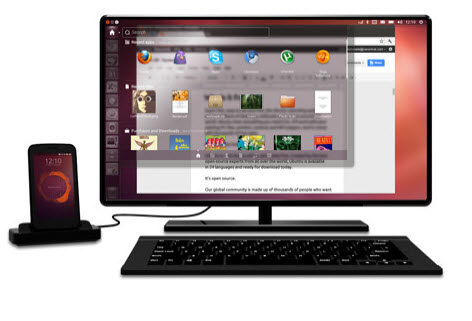
The presentation yesterday of the Samsung S8, apart from the known drip of specifications and images, he left a very interesting detail: the proposal to locate the smartphone in a cradle or docking station, called Dex, which serves both to load, and to connect to a set of screen, keyboard and mouse and use as a desktop computer.

In principle, nothing points to the idea of Samsung to turn your smartphone into the soul of a desktop computer going to become a movement that takes mass adoption body, although some say that only with its release has already surpassed Microsoft with its continuum. But undoubtedly, it does reflect a question: the smartphones that we use today are no longer simply "mobile phones" but pocket computers, they are gaining in performance and memory to the point that they are already much more powerful than the computer that NASA manufactured to start sending men to the moon (and it is curious to imagine all those scientists doing their countdown and connected all of them ... to the smartphone that we carry today in the Pocket:-) and for the usual use that a lot of users give to your computer, such as using a browser or manage some programs of office automation, have more than enough benefits, even possibly loose.

Motorola Atrix LapdockLa proposal is not at all novel: some years ago, in 2011, Motorola put on the market the Atrix, a high-end smartphone that added the possibility of hooking it to a case or lapdock and use it as a complete laptop, with its screen, keyboard and trackpad, which an acquaintance of mine came to use without too many incidents during practically two courses of his engineering career. Now, after the "natural death" of that smartphone, the lapdock in question stores abandoned dust in a drawer of my house (the real geeks never throw our gadgets) waiting for one day to lift me with you want to solder and put me to connect to one of my Raspberry Pi that again give life to what is now a sad and inanimate body without a brain.

Apple patent application itself Apple recently applied for the registration of a very similar patent: a thin "brainless" casing in which a smartphone would be inserted to function as a laptop. The idea is, indeed, very similar to the previous ones, and clearly evokes the company's usual strategy: to take a concept that has been invented for several years but has not received special attention, and reinvent it to endow it with popularity.

In a sense, the trend is also framed in already known and proven movements like the Microsoft Surface or the ipad Pro Apple, which try to build a laptop from a device such as the tablet.

The possibility of using the smartphone as a practically unique device, able to serve as a computer in the pocket for tasks that we carry out when we are in motion but which is inserted in a docking station of some type to use as a complete computer could be surely very attractive, if you do not becomes a loss of benefits or a significant discomfort, within the world of corporate computing , which could be simplified and cheaper in a sensible way and, in addition, fit within the modern tendencies of untying the worker with a specific physical space in which is his computer, in which he glues his post-it and where he puts the photos of his children.

Does it make sense to replace the computer with a device like the smartphone? Are we, with the progressive increase of the performance of the smartphone, to an idea of convergence whose time is coming?

miércoles, 12 de abril de 2017

The ' ransomware ' has become the digital Black Plague

The ' ransomware ' has become the digital Black Plague
The virus that has left KO to Telefónica and half the planet is not an unknown in the world of computer security, nor is Telefónica the first company that falls under the attack of a ' ransomware '. In just five years, these viruses have been located in the top 3 of the worst computer threats. The apocalypse was seen coming and just happened: Someone has turned a ' ransomware ' into a ' worm ' that is propagated by the Nets only automatically.

Cybersecurity experts as respected as the Englishman Kevin Beaumont or Spanish Bernardo Quintero, creator of VirusTotal, endorse the thesis that we are before a ' worm '. In the case of Telefónica, it is confirmed that the initial infection was caused by a ' spam ' campaign, but the most worrying thing is that it was neither necessary. With this type of ' worms ', it is possible to infect thousands of computers without an employee misleading to click on an attachment in your email or plug a malicious USB into your company's internal computer.

Reality can now be more brutal. In this massive and global attack, very focused on Europe, someone would have launched ' worms ' with ' ransomware ' functions to the Internet. These functions would be: Encrypt the computers that are in their path and ask for a ransom of 300 euros for each one, in exchange for the key that decrypts them.

The hole that this worm gets into is a Windows vulnerability for which a patch exists; The affected companies did nothing
 
As for the functions of the ' worm ', these would be to walk through the networks autonomously to the search for computers that had a concrete hole, ' meddle ' by it, infect it and follow its unstoppable path. Only that one of these worms would have reached Telefónica's network, perhaps from Russia or Taiwan, where there have been even more massive infections than in Spain, would be enough to start this historic chaos.

The hole that this worm gets into is a Windows vulnerability that Microsoft reported on March 14 and for which there was a patch since then that, incomprehensibly, the affected companies had not yet installed, perhaps by having thousands of computers and non-exhaustive security policies. Or, also incomprehensiblely, they did not use antivirus, since most antivirus detected this ' ransomware ', according to data from VirusTotal.

The knowledge of this security hole we owe it to equation Group, one of the NSA's elite hacker groups, who ' enjoyed ' him for years, until another group of hackers, called Shadow brokers, stole this information and spread it to the world.
 
Like all the ' ransomware ' of today, this also collects its bailouts with the virtual currency Bitcoin. Tracing the Bitcoin addresses that the criminals have provided their victims to pay the ransom is proving that many of them are paying. As Lorenzo Martínez, technical director of Securízame explains, one of the keys to the success of ' ransomware ' is precisely that "there is a way to solve the attack based on paying a ransom that is affordable in price and that really fix it, it is not a hoax." According to Verizon, 64% of the victims end up paying.
 
70% of the attacks today
 
The possibility of an immediate economic achievement has made growing as the foam the organized ' cybercrime ' related to the ' ransomware ', creating even a business model: ' ransomware-like-service '. In this modality are offered different services to anyone who wants to start in this crime, know nothing about computers but have money to pay: there are those who will sell the virus, who will mount the collection service with Bitcoins, and even who will organize the infection.

Thus, the number of attacks of ' ransomware ' carries bending around the world since at least 2014, when it began to be a massive attack. The police can do little against these criminals, shielded in the ' cybercrime ' international, attacking normally to individuals and small businesses that have no own resources to fight against them, except the known police report.
 
There is already the ' ransomware-like-service ': You can sell the virus, mount the collection service with bitcoins and even organize the infection

With the passage of the years and the impunity of this crime, the amount of the bailouts has been increasing and its authors have dared with bigger ' fish ', like the system of transport of San Francisco and diverse hospitals. The attacks of ' ransomware ' are today 70% of all who are committed to viruses in the world, according to Verizon. We will see now, when the undertakings concerned are large and many, in an unprecedented planetary attack, if it is so easy for their authors to remain safe and sound in their hiding places, in the black caves of the underground.
 

martes, 11 de abril de 2017

Google reveals next version of Android: more battery and better notifications

Google reveals next version of Android: more battery and better notifications

Google has released the first beta for developers of its next version of Android, whose current name is O. Its main features are features that will improve the life of our battery, better management of notifications, picture-in-picture and Notifications counter in the 'apps' icons.
We still do not know everything that will come in this Android O, but it seems that will improve that eternal problem called battery. To do this, the new operating system will aggressively manage what apps can do in the background, as IOS has been doing for some time.
The new notifications will allow to be grouped in groups denominated 'channels' to manage them better, although it has not yet transcended what it means that. An interesting new option is the possibility to postpone them as when we give the 'snooze' button on the alarm clock to let us know later.
Together with these new functions it is expected that more secondary ones will arrive. For example, an improvement in the sound of wireless headphones thanks to new sound codecs. It will also allow application developers to create adaptive icons that change shape and appearance, which may mean that the new Android O will include new themes.
Do not leave because there's more, such as a 'picture-in-picture' mode for videos and a better Android operation on Chromebooks. When will the beta arrive? It is not yet known, but if we take into account that last year all the information was revealed during the May congress it is possible that this will be repeated in 2017.