 |
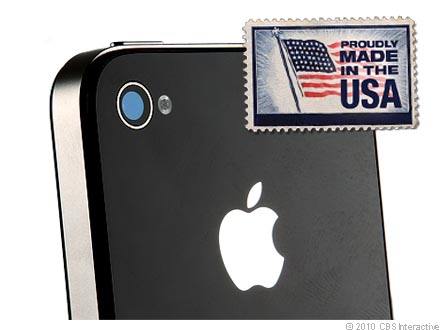
| An iphone made in America? |
Adrián
CamposiPhone made in America, of Merca2.es, sent me some questions to
speak, to the thread of Donald Trump's victory in the American
Presidentials, of the implications that the new president would have to
try to force Apple to manufacture its products entirely in the United
States, one of those ideas that so vehemently expressed in some of the
rallies of his campaign , with phrases like "I'm going to force you to
manufacture your damn computers in America" and threats to impose
tariffs of up to 45% to those who fabricasen in Mexico or China. Adrian
published his article yesterday, titled "The iphone ' Made in USA ' cost
$40 more."
The
possibility of a re-sourcing in the consumer electronics industry has
been previously commented on with different conclusions by publications
such as MIT Tech Review ("the All-American iphone"), Wired ("Trump's
Plan for American-made iphones would be disastrous"), The Washington
Post ("Trump's demand that Apple must make iphones in the U.S. actually
isn't that crazy") or Business Insider ("Sorry Donald Trump — the
American-manufactured iphone isn't going to happen") , all of them
written when virtually no one expected that the expectation that Trump
reached the White House was even minimally credible.
The
idea of manufacturing in the United States consumer electronics
products collides, on the one hand, with a clear problem: the vast
majority of the components are not manufactured or extracted in the
country, and most of the suppliers are in South-East Asia, with all that
it implies when it comes to highlight technicians of each component in
case of problems or incidents in the manufacturing chain. On the other
hand, assembling and assembling is an increasingly less manual and more
strongly robotic work, which would greatly reduce the incidence of
direct labor costs. In addition, made in America products could have a
prestige plus that would possibly lead to greater popularity, which
could even extend beyond the domestic market.
Then the full text that I exchanged with Adríán:
Q. Is there a possibility, even if it is remote, that Apple manufactures in the United States?
R.
Apple already manufactures some of its products in the United States,
although they are products of relatively low quantitative importance as
is the case of the Mac Pro. The great truth is that the impact of the
cost of direct labor is increasingly less on the total manufacturing
process, what leads to this type of "relocation after offshoring" has
somehow become a trend, and even many companies use it as a positive
marketing element linked to corporate social responsibility.
Q. What competitive advantages do you offer to produce in China?
R.
China was the "manufacturer of the world" for its low unit labor costs
for many years, and now, it is adapting fantastically well to robotics.
We have gone from that "Made in China" which actually meant "assembled
in China" to an "engineered in China" that reflects a very strong
displacement of the Asian giant in terms of added value, and now we see
how many of the populous manufactures in the country, which proliferated
labor problems, abuses and unhealthy conditions, now reduce workforce
by 85% while increasing their production and quality thanks to the
robotization , and leave the remaining 15% in charge of maintaining the
robots. The advantages of producing in China now, in addition to having a
huge expertise in assembly and manufacturing and with a growing
workforce specializing in robotic processes, it is the fact that
manufacturers of most electronic components are also in China or in
Southeast Asia, implying that if there is any problem or need assistance
, this one can go faster. It is difficult to think about manufacturing
in a country today if it means that you have to take away much of the
vast majority of your suppliers.
Q. Do you think that an increase in tax rates is expected from Apple if it does not meet Trump's demands?
A.
Trump could raise tariffs on Chinese imports, but that movement, from a
macroecononómico point of view, is more complex than it seems. Let's
see what happens when those Trump ideas in campaign that seem more than
ideas, occurrences, meet the hard sieve of reality. On the other hand,
the descent that Trump seems to bear in mind the capital repatriation
taxes could greatly benefit the technology companies, who have been
accumulating in foreign capital from their operations outside the United
States for years.
Q.
Would manufacturing in the United States be expensive for labor, but
what other factors are the ones that throw back the Cupertino company?
A.
Basically, the problem of moving away from the suppliers of other
components used in the devices, such as processors, memory, batteries,
etc. Removing the well-known case of the Gorilla Glass, manufactured by
Corning in the United States, the vast majority of the components of an
iphone come from Southeast Asia.
Q. Has any other American president tried to produce Apple again in his home country?
A. The idea of relocation, for the time being, has responded more to the companies ' desire to test corporate social responsibility strategies – to generate employment and added value in their own country – than to a political imposition. If Trump tries to change that, it will look like a very unusual interference in a country where the government tends to be markedly liberal and offer great freedom to its companies. We will see in what this type of ideas are concreted that in campaign seemed to resonate very well with some electors who never seemed too analytical ..
Q. How much production would be more expensive?
A.
It is difficult to make an estimate, but Apple is one of the companies
that has advanced in the automation of its production chain, which would
supposedly lead to that possible increase not so high.
Q. What could be the market price in this hypothetical case? (Taking into account the current profit margins)
A.
If the manufacturing process is not determined by a major labour load,
as everything seems to indicate, the increase would not have to be very
meaningful. And we talked about Apple, which is without a doubt the
company with better operating margins throughout the industry.
Q.
What would be the consequences for Apple manufacturing in the United
States at the brand level? Could it be the end of the company?
A.
Manufacturing in the United States could have a potential impact on
costs, but could also contribute a lot in terms of brand image,
reputation and recognition. For a company like Apple, he made enormous
efforts to explain that his decision not to open the iphone to the FBI
was not at all an anti-patriotic decision and that even so, did not get
many Americans to see it like that, fabricating in the United States
could represent an opportunity to improve its image at a popular level.
But again, there are many complications beyond the cost of an
ever-less-important workforce, making this decision extremely complex.
0 comentarios: